Algebra, Word Problems
Word problems present mathematical challenges in a narrative or real-world context. Solving them requires translating the text into mathematical equations or expressions and then applying appropriate mathematical techniques. These can span arithmetic, algebra, geometry, etc.
Motion Problems Solving Word Problems "From the End" / Working Backwards-
A FENCE PROBLEM
The practical usefulness of puzzles is a point that we are liable to overlook. Yet, as a matter of fact, I have from time to time received quite a large number of letters from individuals who have found that the mastering of some little principle upon which a puzzle was built has proved of considerable value to them in a most unexpected way. Indeed, it may be accepted as a good maxim that a puzzle is of little real value unless, as well as being amusing and perplexing, it conceals some instructive and possibly useful feature. It is, however, very curious how these little bits of acquired knowledge dovetail into the occasional requirements of everyday life, and equally curious to what strange and mysterious uses some of our readers seem to apply them. What, for example, can be the object of Mr. Wm. Oxley, who writes to me all the way from Iowa, in wishing to ascertain the dimensions of a field that he proposes to enclose, containing just as many acres as there shall be rails in the fence?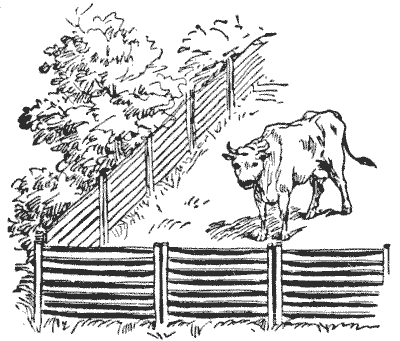 The man wishes to fence in a perfectly square field which is to contain just as many acres as there are rails in the required fence. Each hurdle, or portion of fence, is seven rails high, and two lengths would extend one pole (`16`½ ft.): that is to say, there are fourteen rails to the pole, lineal measure. Now, what must be the size of the field?
Sources:
The man wishes to fence in a perfectly square field which is to contain just as many acres as there are rails in the required fence. Each hurdle, or portion of fence, is seven rails high, and two lengths would extend one pole (`16`½ ft.): that is to say, there are fourteen rails to the pole, lineal measure. Now, what must be the size of the field?
Sources:
- Amusements in Mathematics, Henry Ernest Dudeney Question 117
-
RACKBRANE'S LITTLE LOSS
Professor Rackbrane was spending an evening with his old friends, Mr. and Mrs. Potts, and they engaged in some game (he does not say what game) of cards. The professor lost the first game, which resulted in doubling the money that both Mr. and Mrs. Potts had laid on the table. The second game was lost by Mrs. Potts, which doubled the money then held by her husband and the professor. Curiously enough, the third game was lost by Mr. Potts, and had the effect of doubling the money then held by his wife and the professor. It was then found that each person had exactly the same money, but the professor had lost five shillings in the course of play. Now, the professor asks, what was the sum of money with which he sat down at the table? Can you tell him? Sources:- Amusements in Mathematics, Henry Ernest Dudeney Question 119
-
THE FARMER AND HIS SHEEP
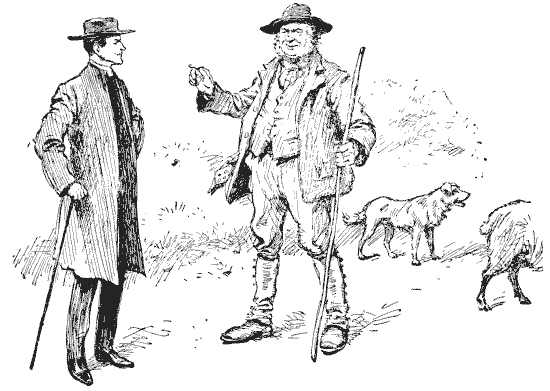
Farmer Longmore had a curious aptitude for arithmetic, and was known in his district as the "mathematical farmer." The new vicar was not aware of this fact when, meeting his worthy parishioner one day in the lane, he asked him in the course of a short conversation, "Now, how many sheep have you altogether?" He was therefore rather surprised at Longmore's answer, which was as follows: "You can divide my sheep into two different parts, so that the difference between the two numbers is the same as the difference between their squares. Maybe, Mr. Parson, you will like to work out the little sum for yourself."
Can the reader say just how many sheep the farmer had? Supposing he had possessed only twenty sheep, and he divided them into the two parts `12` and `8`. Now, the difference between their squares, `144` and `64`, is `80`. So that will not do, for `4` and `80` are certainly not the same. If you can find numbers that work out correctly, you will know exactly how many sheep Farmer Longmore owned.
Sources:- Amusements in Mathematics, Henry Ernest Dudeney Question 120
-
HEADS OR TAILS
Crooks, an inveterate gambler, at Goodwood recently said to a friend, "I'll bet you half the money in my pocket on the toss of a coin—heads I win, tails I lose." The coin was tossed and the money handed over. He repeated the offer again and again, each time betting half the money then in his possession. We are not told how long the game went on, or how many times the coin was tossed, but this we know, that the number of times that Crooks lost was exactly equal to the number of times that he won. Now, did he gain or lose by this little venture?Sources:Topics:Algebra -> Word Problems- Amusements in Mathematics, Henry Ernest Dudeney Question 121
-
THE SEE-SAW PUZZLE
Necessity is, indeed, the mother of invention. I was amused the other day in watching a boy who wanted to play see-saw and, in his failure to find another child to share the sport with him, had been driven back upon the ingenious resort of tying a number of bricks to one end of the plank to balance his weight at the other.
As a matter of fact, he just balanced against sixteen bricks, when these were fixed to the short end of plank, but if he fixed them to the long end of plank he only needed eleven as balance.
Now, what was that boy's weight, if a brick weighs equal to a three-quarter brick and three-quarters of a pound?
Sources:- Amusements in Mathematics, Henry Ernest Dudeney Question 122
-
A LEGAL DIFFICULTY
"A client of mine," said a lawyer, "was on the point of death when his wife was about to present him with a child. I drew up his will, in which he settled two-thirds of his estate upon his son (if it should happen to be a boy) and one-third on the mother. But if the child should be a girl, then two-thirds of the estate should go to the mother and one-third to the daughter. As a matter of fact, after his death twins were born—a boy and a girl. A very nice point then arose. How was the estate to be equitably divided among the three in the closest possible accordance with the spirit of the dead man's will?" Sources:- Amusements in Mathematics, Henry Ernest Dudeney Question 123
-
THE MINERS' HOLIDAY
Seven coal-miners took a holiday at the seaside during a big strike. Six of the party spent exactly half a sovereign each, but Bill Harris was more extravagant. Bill spent three shillings more than the average of the party. What was the actual amount of Bill's expenditure? Sources:- Amusements in Mathematics, Henry Ernest Dudeney Question 125
-
THE FIVE BRIGANDS
The five Spanish brigands, Alfonso, Benito, Carlos, Diego, and Esteban, were counting their spoils after a raid, when it was found that they had captured altogether exactly `200` doubloons. One of the band pointed out that if Alfonso had twelve times as much, Benito three times as much, Carlos the same amount, Diego half as much, and Esteban one-third as much, they would still have altogether just `200` doubloons. How many doubloons had each?
There are a good many equally correct answers to this question. Here is one of them:
A 6 × 12 = 72 B 12 × 3 = 36 C 17 × 1 = 17 D 120 × ½ = 60 E 45 × 1/3 = 15 200 200 The puzzle is to discover exactly how many different answers there are, it being understood that every man had something and that there is to be no fractional money—only doubloons in every case.
This problem, worded somewhat differently, was propounded by Tartaglia (died `1559`), and he flattered himself that he had found one solution; but a French mathematician of note (M.A. Labosne), in a recent work, says that his readers will be astonished when he assures them that there are `6,639` different correct answers to the question. Is this so? How many answers are there?
Sources:Topics:Number Theory Arithmetic Algebra -> Word Problems Algebra -> Sequences -> Arithmetic Progression / Arithmetic Sequence Combinatorics -> Case Analysis / Checking Cases -> Processes / Procedures Algebra -> Equations -> Diophantine Equations- Amusements in Mathematics, Henry Ernest Dudeney Question 133
-
THE DUTCHMEN'S WIVES
I wonder how many of my readers are acquainted with the puzzle of the "Dutchmen's Wives"—in which you have to determine the names of three men's wives, or, rather, which wife belongs to each husband. Some thirty years ago it was "going the rounds," as something quite new, but I recently discovered it in the Ladies' Diary for `1739-40`, so it was clearly familiar to the fair sex over one hundred and seventy years ago. How many of our mothers, wives, sisters, daughters, and aunts could solve the puzzle to-day? A far greater proportion than then, let us hope.
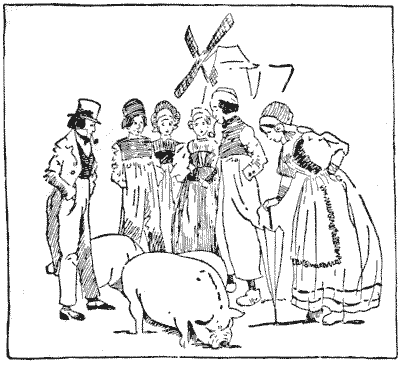
Three Dutchmen, named Hendrick, Elas, and Cornelius, and their wives, Gurtrün, Katrün, and Anna, purchase hogs. Each buys as many as he (or she) gives shillings for one. Each husband pays altogether three guineas more than his wife. Hendrick buys twenty-three more hogs than Katrün, and Elas eleven more than Gurtrün. Now, what was the name of each man's wife?
 Sources:Topics:Number Theory -> Prime Numbers Arithmetic Algebra -> Word Problems Algebra -> Equations -> Diophantine Equations
- Amusements in Mathematics, Henry Ernest Dudeney Question 139
-
FIND ADA'S SURNAME
This puzzle closely resembles the last one, my remarks on the solution of which the reader may like to apply in another case. It was recently submitted to a Sydney evening newspaper that indulges in "intellect sharpeners," but was rejected with the remark that it is childish and that they only published problems capable of solution! Five ladies, accompanied by their daughters, bought cloth at the same shop. Each of the ten paid as many farthings per foot as she bought feet, and each mother spent `8`s. `5`¼d. more than her daughter. Mrs. Robinson spent `6`s. more than Mrs. Evans, who spent about a quarter as much as Mrs. Jones. Mrs. Smith spent most of all. Mrs. Brown bought `21` yards more than Bessie—one of the girls. Annie bought `16` yards more than Mary and spent £`3, 0`s. `8`d. more than Emily. The Christian name of the other girl was Ada. Now, what was her surname? Sources:- Amusements in Mathematics, Henry Ernest Dudeney Question 140