Combinatorics, Combinatorial Geometry, Grid Paper Geometry / Lattice Geometry
This involves geometric problems set on a grid of equally spaced points (a lattice), often where coordinates are integers. Questions might involve finding areas of polygons using grid points (e.g., Pick's Theorem), counting lattice points, or analyzing shapes drawn on grid paper.
-
Question
Dissect the given shape into four congruent parts:
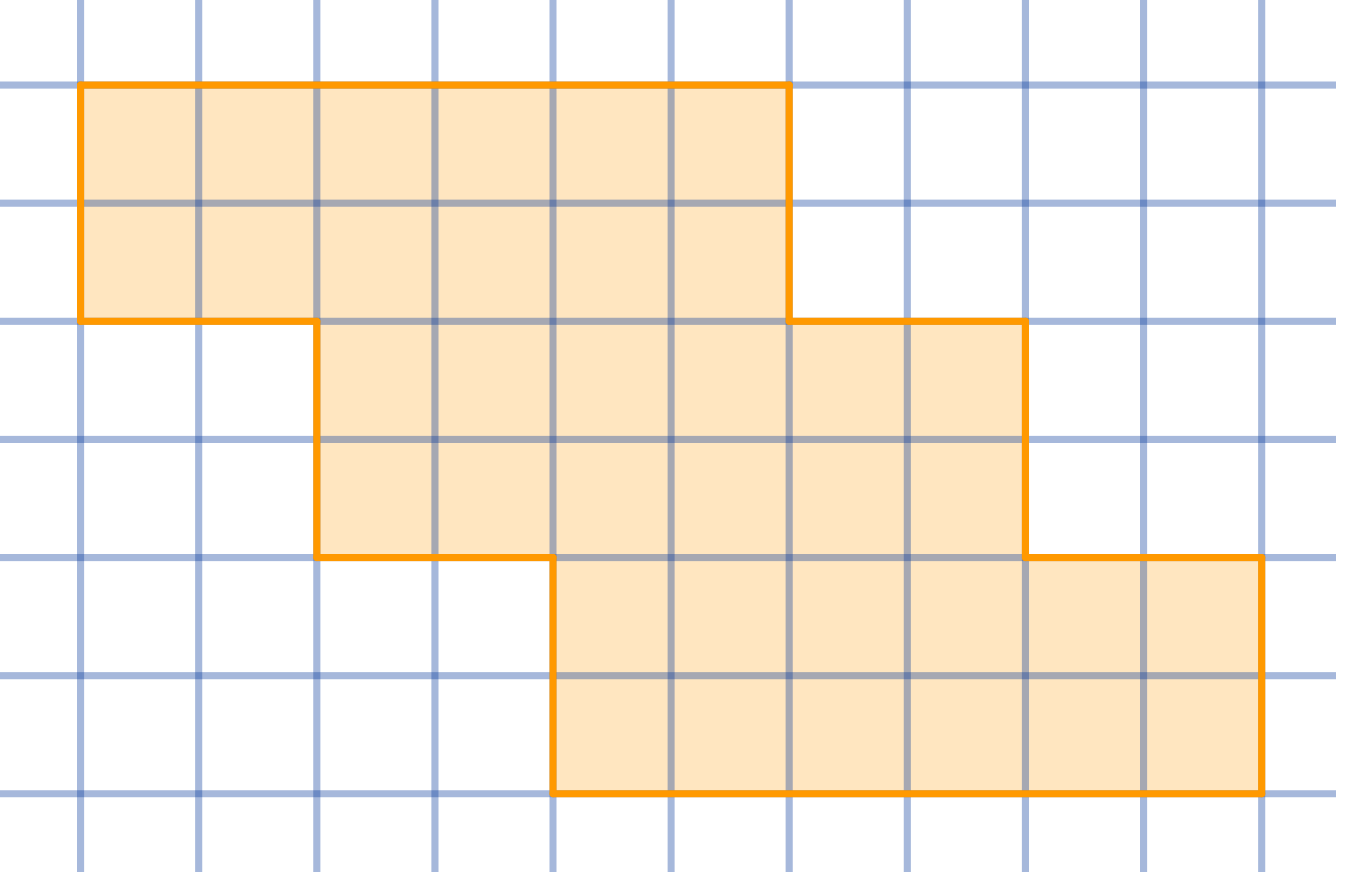 Topics:Geometry -> Plane Geometry -> Symmetry Combinatorics -> Combinatorial Geometry -> Cut a Shape / Dissection Problems Combinatorics -> Combinatorial Geometry -> Grid Paper Geometry / Lattice Geometry Geometry -> Plane Geometry -> Plane Transformations -> Congruence Transformations (Isometries)
 -
Question
Dissect the given shape into four congruent parts:
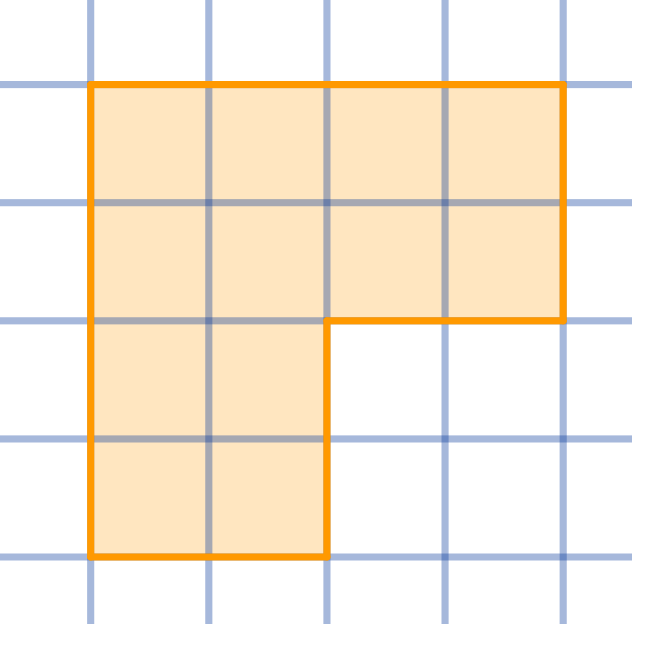 Topics:Geometry -> Plane Geometry -> Symmetry Combinatorics -> Combinatorial Geometry -> Cut a Shape / Dissection Problems Combinatorics -> Combinatorial Geometry -> Grid Paper Geometry / Lattice Geometry Geometry -> Plane Geometry -> Plane Transformations -> Congruence Transformations (Isometries)
 -
Question
Cut the given shape into eight congruent parts:

-
Question
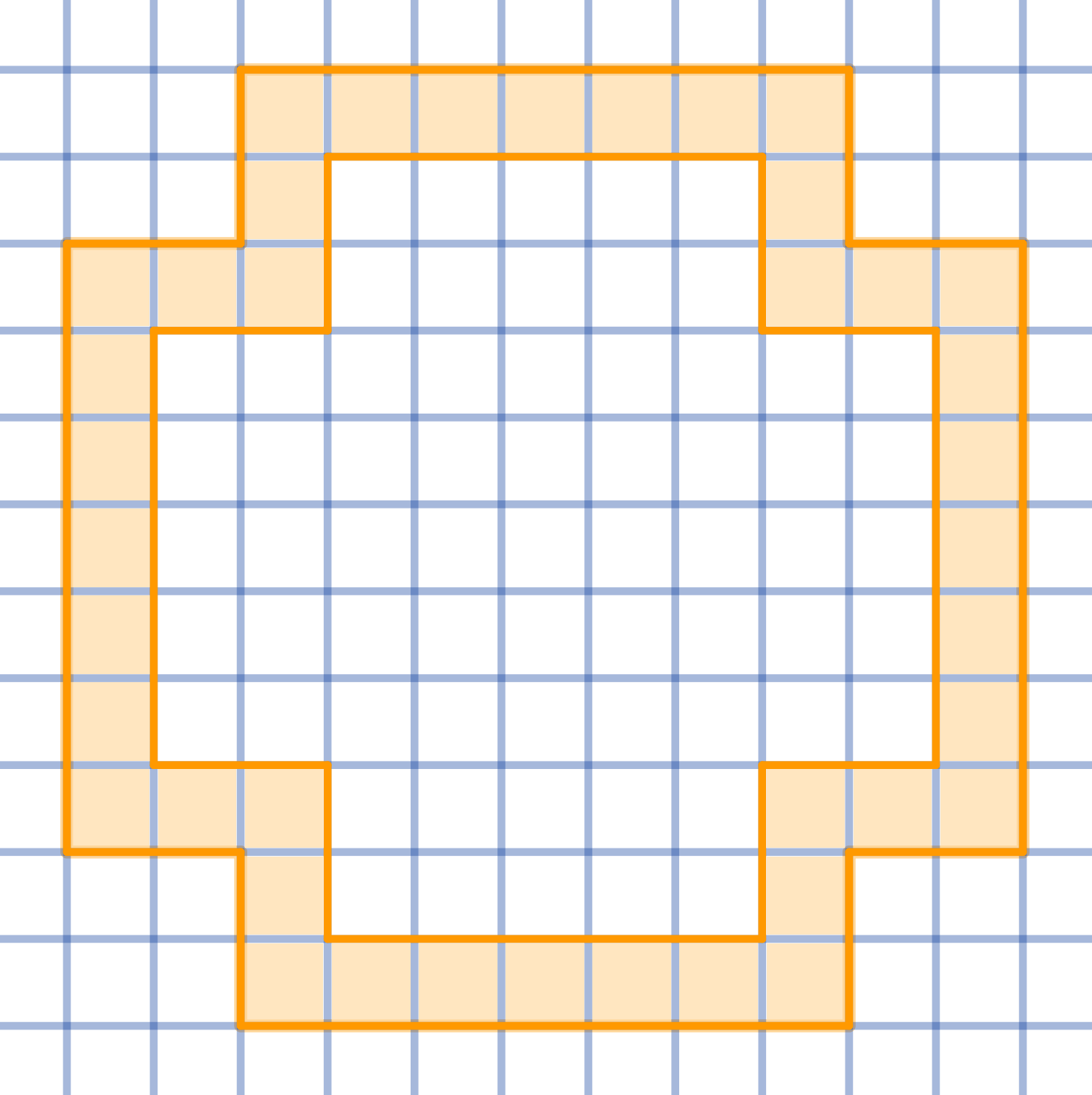
Divide the given shape into 16 congruent parts:
-
Question
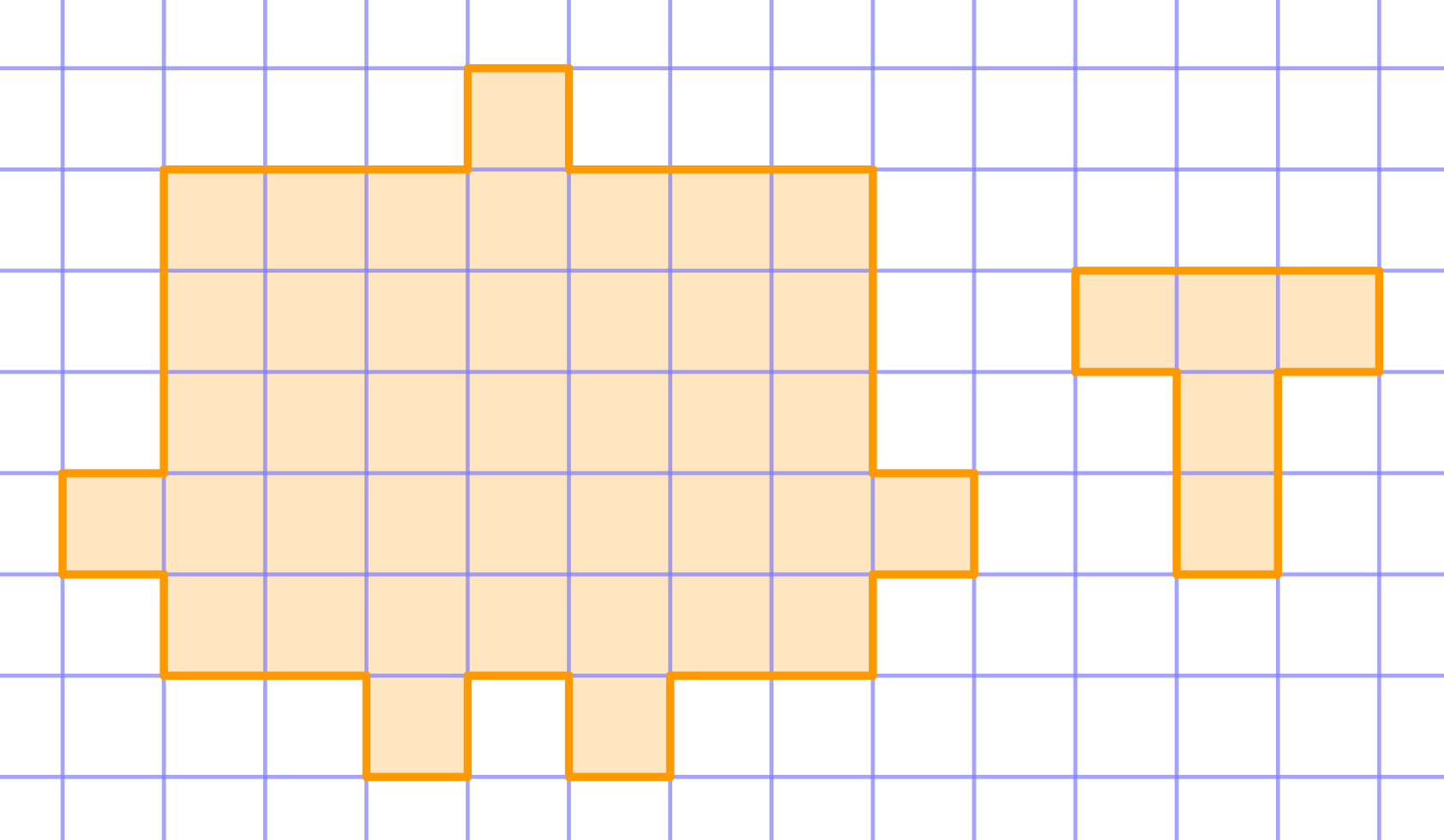
Cut the given shape into "T" shapes as shown in the diagram:
-
Question
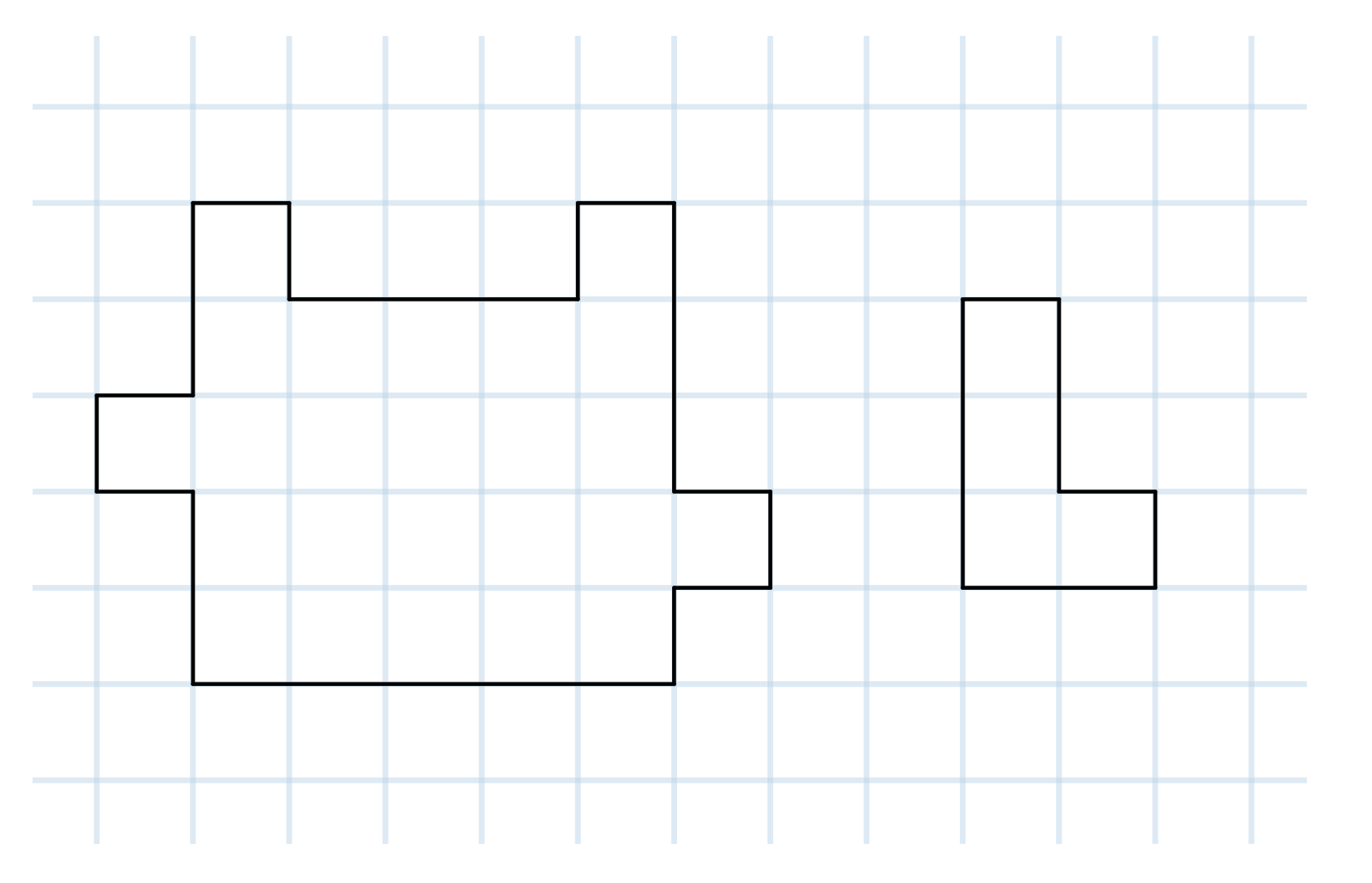
Can you cut the shape on the left into six shapes like the shape on the right?
-
Question
What is the maximum number of chess kings that can be placed on an `8xx8` board such that they do not threaten each other?
Topics:Combinatorics -> Pigeonhole Principle Proof and Example -> Constructing an Example / Counterexample Combinatorics -> Case Analysis / Checking Cases -> Processes / Procedures Minimum and Maximum Problems / Optimization Problems Combinatorics -> Combinatorial Geometry -> Grid Paper Geometry / Lattice Geometry -
Area of the Shape
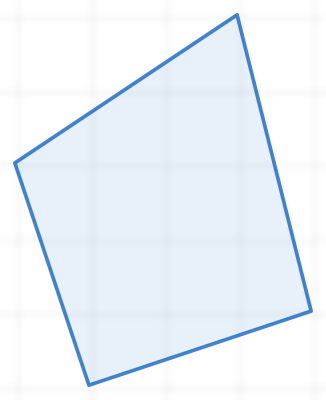
Given a grid paper where the area of each square is one unit area. Find the area of the shape (in unit areas)
 Sources:
 -
Cutting
What is the largest number of rectangles of size `2 times 5` that can be cut from a `9 times 9` square?
Sources: -
The Beaver and the Mole
There is a plot of land in the shape of a square `4 times 4` divided into cells of `1 times 1`. The beaver wants to build a house on it that occupies 4 cells, which from a top-down view looks like this:
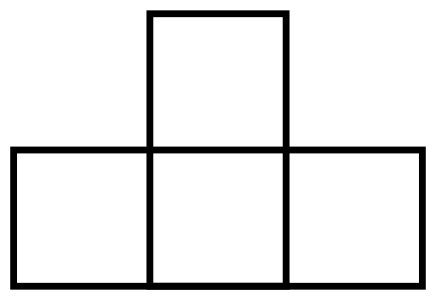
The mole wants to disturb him. For this purpose, it can dig holes, each of which occupies one cell. It is impossible to build on the cells that have become holes. What is the smallest number of holes the mole needs to dig so that the beaver cannot build the house?
Sources: